
Bottle Washer Spray Nozzle Scale Control for Beverage Plants
In beverage bottle washing, hard water scale in rinse nozzles, heating sections, and caustic wash circuits can reduce spray coverage, increase rejects, and shorten cleaning intervals.
Use ScaleDp ID003 to support active descaling, scale prevention, anti-corrosion protection, and rust-reduction while tracking site metrics such as pressure, flow, temperature, cleaning interval, and visible deposits.
Upload your bottle washer layout, water report, and nozzle inspection photos for installation guidance.
Scale-control background for Beverage Bottling Bottle Washer
Continuous bottle washing with caustic bath, hot rinse, final rinse nozzles, conveyor movement, and high makeup water demand.
Process stage
Pre-rinse, caustic wash, hot rinse, final rinse, bottle inspection
Expected result
Use ScaleDp ID003 to support active descaling, scale prevention, anti-corrosion protection, and rust-reduction while tracking site metrics such as pressure, flow, temperature, cleaning interval, and visible deposits.
Common symptoms before selecting a scale-control solution
Bottle washer rejects can come from labels, caustic concentration, nozzle blockage, water hardness, or final rinse quality. Confirm scale before changing treatment.
Rinse coverage becomes uneven
Possible cause: Scale or label debris restricts spray nozzles
How to confirm: Inspect nozzle spray pattern and strainer condition
Next step: Clean nozzles and identify deposit type
Bottle spots or residue increase
Possible cause: Hardness salts remain after rinse or final rinse TDS is high
How to confirm: Check final rinse hardness, conductivity, and visual inspection reject trend
Next step: Review rinse flow, overflow, and water treatment
Washer cleaning frequency increases
Possible cause: Heated sections and nozzles accumulate mineral deposits
How to confirm: Record cleaning interval and deposit location
Next step: Evaluate scale prevention after a clean baseline
Label glue, caustic concentration, bottle soil load, biofilm, poor spray alignment, and final rinse contamination require separate action.
Why mineral scale builds up in this system
Heated rinse water, caustic alkalinity, and evaporation around spray zones promote carbonate scale and mixed deposits.
Temperature and concentration factors
Scale risk rises in hot rinse and wash zones above 55 deg C.
Drag-out, overflow control, and evaporation affect mineral concentration in washer sections.
Heat surface risk
Nozzles, strainers, heating coils, and hot rinse headers are high-risk points.
Typical maintenance signals to record before treatment
Recommended scale-control approach
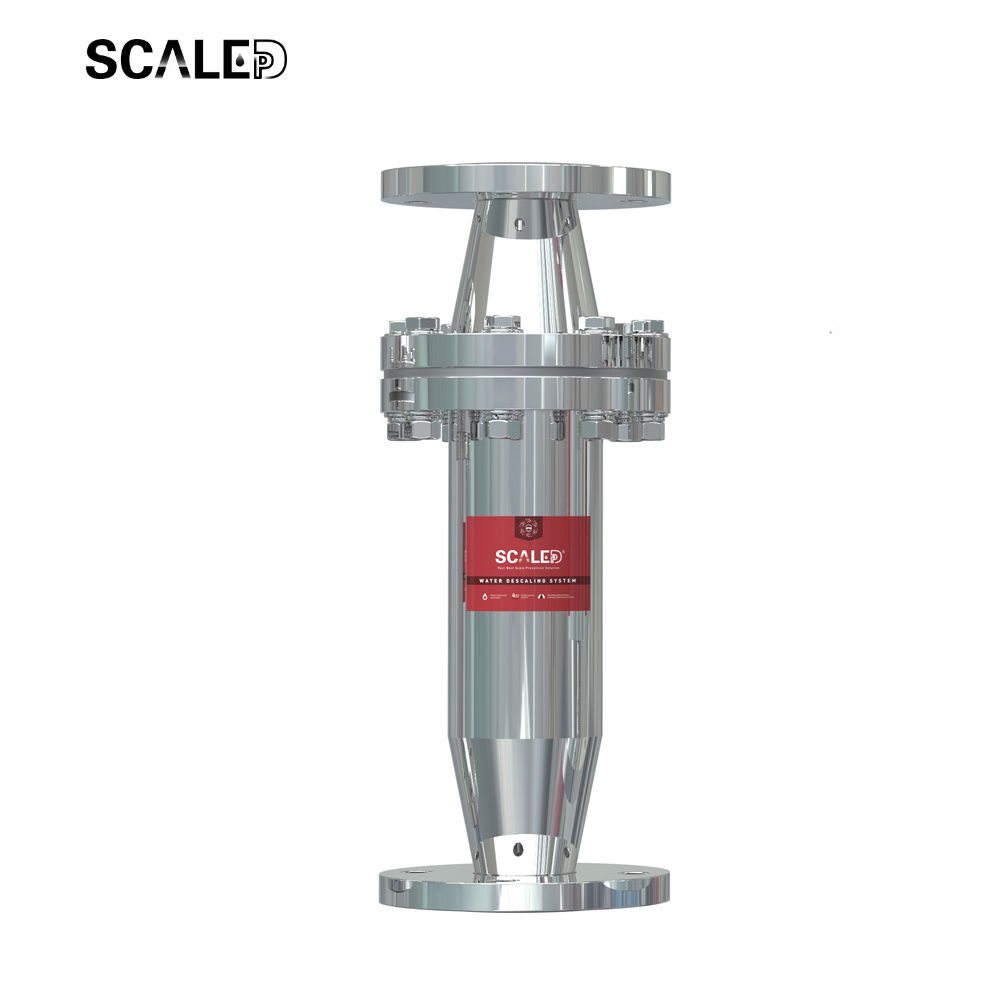
ScaleDp DPSE SCALEDP ID003 installed for Bottle Washer water treatment, supporting descaling, continuous scale inhibition, anti-corrosion protection, and rust-removal/rust-reduction in the water system.
Suitable conditions
Hard-water scaling, existing or recurring mineral deposits, corrosion/rust risk in the water path, measurable performance drift, and an installation point matching DN50 / 10 m3/h recommended flow.
Why this solution
DPSE SCALEDP ID003 matches the catalog DN/flow range and supports descaling, scale inhibition, anti-corrosion protection, and rust reduction without routine chemical consumables.
Unsuitable conditions
If oil, biological fouling, suspended solids, strict TDS targets, hygiene validation, or process chemistry are also present, combine ScaleDp with the matching filtration, cleaning, sanitation, or chemistry-control step for a complete water-system program.
Limitations
For severe blockage or complex water chemistry, an initial clean baseline and supporting filtration or chemistry checks can speed recovery and make ScaleDp descaling, scale inhibition, anti-corrosion, and rust-reduction performance easier to verify.
Share pipe size, flow rate, water report, rust/scale photos, and site layout so we can confirm the ID003 selection and installation position.
Contact us for model selectionSuggested installation position
Install on washer makeup water or final rinse feed before nozzles and heated rinse sections, after basic filtration.
Upload a photo of your pipe layout. We can mark the suggested installation position.

Show flow direction, pump, valves, bypass, filters, and the ScaleDp ID003 position before the target equipment.
DPSE SCALEDP ID003 Industrial Water Descaler
Available series and model options
DPSE SCALEDP Industrial Series Parameters
Compare ID001 to ID008 by nominal diameter, flange connection, flow range, pressure, and temperature before final model confirmation.
| Model | Nominal Diameter | Connection | Recommended Flow | Flow Range | Max Pressure | Temp |
|---|---|---|---|---|---|---|
| ID001 | DN32 | Flange | 4 m3/h | 1.4-8 m3/h | 1.6 MPa | 5-280 deg C |
| ID002 | DN40 | Flange | 7 m3/h | 2-12 m3/h | 1.6 MPa | 5-280 deg C |
| ID003 | DN50 | Flange | 10 m3/h | 3.5-20 m3/h | 1.6 MPa | 5-280 deg C |
| ID004 | DN65 | Flange | 18 m3/h | 6-35 m3/h | 1.6 MPa | 5-280 deg C |
| ID005 | DN80 | Flange | 27 m3/h | 9-50 m3/h | 1.6 MPa | 5-280 deg C |
| ID006 | DN100 | Flange | 42 m3/h | 14-80 m3/h | 1.6 MPa | 5-280 deg C |
| ID007 | DN125 | Flange | 66 m3/h | 22-120 m3/h | 1.6 MPa | 5-280 deg C |
| ID008 | DN150 | Flange | 95 m3/h | 32-180 m3/h | 1.6 MPa | 5-280 deg C |
Final model should be confirmed by pipe size, actual flow rate, pressure, temperature, water quality, and installation layout.
Information needed before final model selection
Required parameters
Pipe size, flow rate, pressure, temperature, water hardness, alkalinity, TDS, corrosion/rust observations, connection type, and site photos for ID003 confirmation.
Water report fields
Hardness, alkalinity, TDS, pH, chloride, iron, manganese, silica, sulfate, conductivity, and any visible rust or corrosion notes.
Scale thickness or visible deposits, rust/corrosion observations, pressure drop, flow rate, outlet temperature, cleaning interval, downtime, and water-quality trend.
Baseline problem and monitoring guidance
Before problem
Rinse nozzles lost coverage and bottle inspection rejects increased before washer cleaning.
After-installation observation
After installing ScaleDp ID003, track descaling progress, new scale prevention, corrosion/rust reduction, pressure, flow, temperature, and cleaning interval against the pre-install baseline.
Data type: engineering_experience | Urgency level: medium
Framed as monitoring guidance, not a verified performance claim. Replace with a real anonymized case when measured customer data is available.
Maintenance, inspection and safety notes
Follow hot caustic safety, pressure release, conveyor lockout, and beverage plant hygiene procedures.
Other treatment methods to compare
Water softener for washer makeup
Choose a softener when defined low-hardness rinse water is required and regeneration management is acceptable.
Nozzle filtration and washer sanitation program
Use filtration and sanitation first when label debris, biofilm, or process residue is the main blockage cause.
Share water hardness, flow rate, pipe size, and site photos.
Our team can help check the suitable installation position and confirm whether additional pre-filtration, bypass space, or pre-cleaning is needed.
Common questions about Spray Nozzle Scale Control
Can ScaleDp remove existing scale and prevent new scale?
Yes. ScaleDp is positioned for descaling and ongoing scale inhibition. For heavily blocked equipment, establishing a clean baseline can speed recovery and make the improvement easier to measure.
Does ScaleDp also help with corrosion and rust?
Yes. The product positioning includes anti-corrosion protection plus rust-removal and rust-reduction support in water systems. Track chloride, pH, iron, oxygen exposure, and visible rust trend for verification.
How is the correct model selected?
Select by nominal diameter, flow, pressure, temperature, connection, and site layout. This page maps the case to DPSE SCALEDP ID003 from the product catalog.