
Water heater scale builds up on heating elements because their hot surfaces encourage dissolved minerals to form solid deposits. Calcium carbonate is often the main ingredient. Each heating cycle gives those deposits another chance to grow, especially when fresh hard water enters the system.

The white crust is therefore more than a cosmetic problem. It can hinder heat transfer, raise the element’s operating temperature and increase service needs. Understanding this process helps homeowners, installers and equipment dealers choose a suitable water heater descaler and address recurring buildup.
What Makes Water Hard?
Calcium and magnesium make water hard. Groundwater often picks up these minerals as it passes through rock and soil. They remain dissolved, so water can look clear while carrying enough minerals to form scale.
The USGS explanation of water hardness identifies dissolved calcium and magnesium as the main contributors. However, hardness alone does not predict how quickly an element will scale. Alkalinity, pH, temperature and water use also affect the result.
Is Hard Carbonated Water the Same as Hard Water?
The phrase hard carbonated water can cause confusion. Carbonated water contains dissolved carbon dioxide, while hard water contains calcium and magnesium. A water supply can have either property, both properties or neither.
For heater scale, the more relevant term is carbonate hardness. This describes hardness associated with bicarbonate and carbonate alkalinity. Heating can encourage calcium carbonate to precipitate from such water. It does not mean the household supply must be sparkling water.
Why Heating Elements Attract Water Heater Scale
1. The Element Surface Is Hotter Than the Water
An electric element must be hotter than the surrounding water to transfer heat into it. Therefore, the thin water layer touching the element experiences conditions different from the tank’s average temperature.
Heating changes carbonate chemistry and can promote calcium carbonate precipitation. A U.S. Department of Energy guide to combined heating systems discusses how hotter water encourages mineral deposits in heat exchangers. The same general chemistry helps explain buildup on hot element surfaces.

2. Surface Imperfections Give Crystals a Starting Point
Microscopic rough spots provide places where crystals can begin growing. This process is called nucleation. Once a mineral layer attaches, it offers more surface area for later deposits.
As a result, an established crust can keep growing through repeated heating cycles. Deposit texture depends on water chemistry and operating conditions. Not every white deposit has the same composition or adhesion.
3. Fresh Water Keeps Bringing in Minerals
Whenever someone uses hot water, fresh water replaces it. If that supply remains hard, the heater receives another mineral load. Consequently, a busy household or hotel may accumulate deposits faster than a lightly used property with similar water.
Tank water does not need to boil for scale to form. Ordinary operating temperatures can support deposition when the chemistry favors it.
Which Conditions Make Buildup Worse?
Several factors often act together. For example, high hardness combined with frequent heating can create more maintenance work than either factor alone.
| Condition | Why it matters | Useful check |
|---|---|---|
| Hard water with carbonate alkalinity | Supplies calcium and carbonate species that can form deposits | Test hardness, alkalinity and pH |
| High element surface temperature | Encourages precipitation near the metal | Confirm the correct element type and operating settings |
| Heavy daily hot water use | Brings more minerals into the heater | Record daily demand and operating hours |
| Existing bonded scale | Provides sites for further crystal growth | Inspect during scheduled service |
| Restricted water movement | Changes local heat transfer and can create hotter areas | Check flow paths and sediment buildup |
Temperature settings also serve comfort and hygiene requirements. Therefore, follow the appliance instructions rather than lowering the setting solely to control scale.
What Water Heater Scale Does to Equipment
Local Overheating and Element Failure
A mineral crust adds thermal resistance between the element and the water. The element sheath may then run hotter while transferring heat. Over time, severe deposits can contribute to premature failure.
However, dry firing, electrical faults and corrosion can also damage elements. An inspection should identify the cause before anyone replaces parts.
Performance Loss and Energy Costs
Scale can impair recovery and heat transfer, but the energy penalty varies by heater design. Gas-fired heat exchangers and electric immersion elements do not lose energy in the same way.
In particular, most electricity entering an immersed resistance element still becomes heat within the tank. A fixed claim that every scale thickness causes a specific electricity increase would be misleading. Instead, compare energy use at similar hot water demand and check recovery time alongside deposit condition.
Noise, Debris and More Service Calls
Popping or rumbling may accompany sediment and uneven heating. Meanwhile, detached mineral pieces can collect near the tank bottom or in strainers. These signs justify inspection, although they do not prove scale is the only fault.
For dealers, recurring water heater scale can mean repeat customer complaints. Explaining water quality at installation helps customers understand why maintenance and prevention both matter.
Choosing a Water Heater Descaler for Ongoing Protection
The term water heater descaler can describe a cleaning liquid, a pump kit or an installed treatment device. These products serve different purposes, so define the goal before comparing them.
| Option | Main role | Ongoing requirement |
|---|---|---|
| Descaling solution and pump kit | Remove existing compatible mineral deposits during service | Repeat cleaning when the appliance needs it |
| Ion-exchange softener | Remove calcium and magnesium from incoming water | Salt supply, regeneration and system maintenance |
| ScaleDp water descaler | Influence mineral deposition without removing hardness | Correct sizing and performance monitoring |
A sediment filter alone does not remove dissolved hardness. Likewise, a low TDS reading does not replace a hardness test. Choose equipment using the actual water analysis and the heater’s requirements.
How ScaleDp Helps Manage Recurring Deposits
ScaleDp describes its DPSE technology as a physical process that influences mineral crystallization. Flowing water contacts a multi-alloy core, creating localized electrochemical activity. The intended effect is reduced adhesion of new hard deposits.
The manufacturer also describes gradual loosening of some existing scale during operation. Results depend on water chemistry, flow, temperature and deposit condition. Consequently, a heavily blocked heater may still need service before ongoing protection can deliver useful results.
For residential applications, the ScaleDp WD001 water descaler operates without salt, chemical dosing or external electricity. It has no resin regeneration cycle. Calcium and magnesium remain in the water, so hardness readings should remain broadly similar.
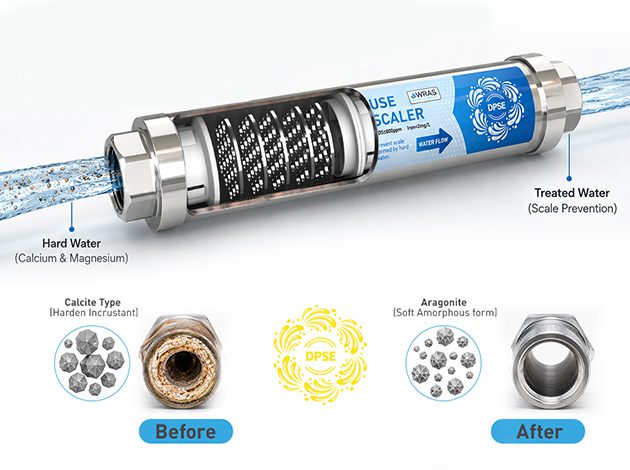
Installers should confirm the treatment position and flow range. A unit on the heater inlet treats that branch; whole-house protection requires a suitable position before distribution. This distinction also helps dealers recommend the right coverage.
Make Scale Prevention Part of Your Water Heater Offering
For water heater distributors, installers and OEM brands, scale prevention is best addressed during product selection and installation. In hard-water markets, recurring deposits on heating elements can lead to customer complaints, service visits and concerns about heating performance. Including suitable scale control in the initial proposal helps address this operating risk early and creates an opportunity to offer a more complete equipment package.
Depending on the application, ScaleDp can be considered for a whole-house scale-control solution or installation at the heater’s cold-water inlet. This gives partners a practical option to include in new installations, replacement projects and bundled product offerings.
Send us your target market, heater type, water hardness, pipe size and peak flow rate. Our team can assess model suitability and connection requirements, then discuss sample testing before you introduce the solution to your customers.



