
If your water softener suddenly starts using too much salt, you should check the system right away. High salt consumption often comes from incorrect hardness settings, hidden household leaks, salt bridges, frequent regeneration, water quality changes, or an aging softener.
In many cases, you can solve the problem by adjusting one setting, cleaning the brine tank, or fixing a small leak. If you want to reduce salt use over the long term, you can also install a physical scale inhibitor before the water softener. This setup helps condition hard water minerals before they enter the softener, lowers the load on the resin bed, and may reduce regeneration frequency.
For an average family of four with moderately hard water, a water softener often uses around 40 pounds of salt per month. If you now add salt every two weeks or even every week, your system may have a problem that needs attention.
Key Takeaways
- Check the hardness setting, hidden leaks, and salt bridges first when salt use suddenly rises.
- Frequent regeneration always increases salt consumption.
- Aging resin, old control valves, and changing water quality can increase long-term salt use.
- A physical scale inhibitor installed before the softener can help reduce the softener’s workload.
- A “scale inhibitor + water softener” setup works well for high-hardness water areas.
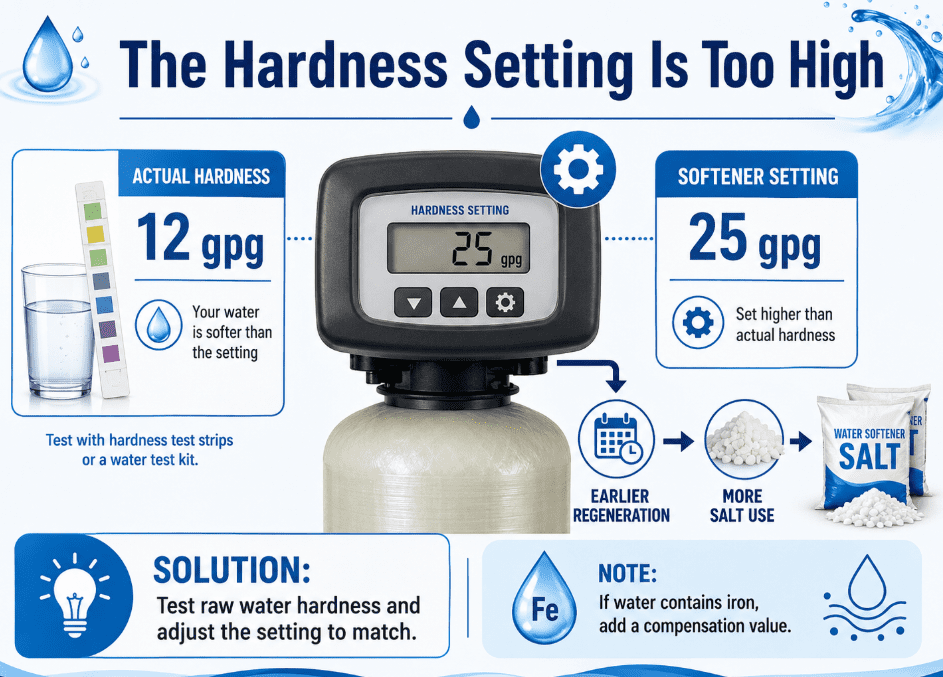
1. The Hardness Setting Is Too High
The hardness setting often causes excessive salt use. Your water softener uses this value, together with water usage, to decide when to regenerate.
If your actual water hardness measures 12 grains per gallon, but the softener setting shows 25 grains, the system will regenerate earlier than necessary. That extra regeneration cycle wastes salt and water.
Solution:
Test your raw water with hardness test strips or a water hardness test kit. Then adjust the softener setting to match the real hardness level. If your water contains iron, add a proper compensation value because iron increases the cleaning load on the resin.
2. Hidden Leaks in the Home
Your water softener counts every gallon of water that flows through it. If a toilet, faucet, outdoor pipe, or appliance leaks, the softener treats that wasted water as normal household use.
A leaking toilet creates one of the most common problems. A worn flapper or poor seal can waste a large amount of water every day and trigger extra regeneration cycles.
Solution:
Turn off all water-using fixtures in the home. Then check whether the softener still shows water flow. If it does, inspect toilets, faucets, outdoor hose bibs, washing machine connections, and appliance inlet hoses. You can place dye tablets in the toilet tank to quickly find a toilet leak.
3. Salt Bridge or Salt Sludge in the Brine Tank
Your brine tank may look full, but the salt may not dissolve properly. A salt bridge forms when the top salt layer hardens and leaves an empty space below it. Salt sludge forms when salt turns into thick deposits at the bottom of the tank.
Both problems stop the softener from making proper brine. The system may regenerate poorly and then regenerate more often to compensate.
Solution:
Gently push a broom handle into the salt layer. If you break through a hard crust, you likely found a salt bridge. Remove the hardened salt and run a manual regeneration cycle.
If you see salt sludge at the bottom, empty the tank, clean it, and refill it with high-purity softener salt.
4. The Brine Valve or Float Assembly Sticks
The float assembly controls the water level inside the brine tank. If the float sticks or the brine valve fails to close properly, the tank may take in too much water. Each regeneration cycle may then draw too much brine and waste salt.
Solution:
Open the brine tank and check whether the float moves freely. Clean away salt crystals, dirt, and debris. Replace the float assembly if the float takes in water, the valve body cracks, or the parts no longer move smoothly.
5. The Water Softener Regenerates Too Often
Some softeners regenerate on a fixed schedule, such as every one or two days. This setting wastes salt when your home uses little water.
Older timer-based softeners create this problem more often because they regenerate by time, not by actual water usage.
Solution:
Check the regeneration settings on the control panel. Choose AUTO mode or demand-initiated regeneration if your softener supports it. If your old unit only uses timer-based regeneration, consider upgrading to a metered water softener.
6. The Control Valve or Flow Meter Fails
The control valve manages the main operating cycles of the water softener. Worn seals, a stuck piston, or an inaccurate flow meter can cause abnormal regeneration. In some cases, the softener may even send water to the drain when it should stay in service mode.
Solution:
Listen near the drain line while the softener runs in normal service mode. If you hear water flowing when the system does not regenerate, the valve seals or internal parts may need repair.
7. Your Water Quality Has Changed
Well water users often see changes in hardness, iron, manganese, or TDS. These changes increase the softener’s workload. Municipal water can also change when the supplier switches sources or blends water from different areas.
Solution:
Test your raw water at least once a year. If the test shows high iron, install an iron removal filter before the softener to protect the resin. If hardness rises, update the softener setting to match the new water conditions.
8. The Softener Size Does Not Match Your Home
An undersized softener regenerates too often because it cannot handle your daily hardness load. An oversized softener can also waste salt if the installer sets the salt dose incorrectly.
Proper sizing should consider the number of people in the home, daily water use, and raw water hardness.
Solution:
Recalculate your daily hardness removal demand. If your softener regenerates much more often than expected, check the unit size, salt dosage, hardness setting, and possible hidden leaks.
9. The Resin Bed Has Aged or Collected Iron
Standard softener resin often loses performance after 8 to 12 years of use. As the resin ages, it loses ion exchange capacity. The softener then regenerates more often to keep up with demand.
Iron in raw water can shorten resin life even faster. Iron coats the resin beads and reduces their ability to exchange hardness minerals.
Solution:
Check the resin condition if your softener has run for many years and salt use keeps rising. Use a resin cleaner for mild fouling. Replace the resin if you see severe aging or iron fouling. In some cases, replacing the whole softener makes more sense.
More Than Repair: How to Reduce Softener Salt Use Long Term
The nine problems above help you restore your water softener to normal operation. However, even a properly working softener still needs salt.
If you want to reduce salt use from the source, add a physical scale inhibitor before the softener.
ScaleDp physical scale inhibitors use DPSE technology. Alloy media create a microcurrent that acts on calcium and magnesium ions in the water. This process changes how hardness minerals crystallize. Instead of forming hard, sticky calcite scale, the minerals shift toward a less adhesive crystal form.
When conditioned water enters the softener, the resin bed handles a lower scaling burden. This may reduce regeneration frequency and help lower long-term salt use.


Benefits of Using a ScaleDp Scale Inhibitor Before a Water Softener
You do not need to choose between a salt-based water softener and a salt-free scale inhibitor. In high-hardness water areas, many homeowners can benefit from using both.
| Comparison Item | Water Softener Only | Scale Inhibitor Only | Scale Inhibitor + Water Softener |
|---|---|---|---|
| Soft water feel | Yes | No | Yes |
| Uses salt | Yes | No | Yes, but often less |
| Scale control range | After the softener | Whole-house pipes | Whole-house pipes and softener protection |
| Removes minerals | Yes | No | The softener removes hardness after pre-treatment |
| Maintenance | Add salt and clean the system | Low maintenance | Lower salt refill frequency |
| Best for | Homes that want soft water feel | Moderate-hardness water | High-hardness water and lower salt use |
The water softener gives you the smooth feel people expect during bathing and laundry. The scale inhibitor helps reduce scale adhesion and lowers the pressure on the softener. This combination works especially well for families that carry heavy salt bags often and want to lower long-term operating costs.
How Much Salt Should a Water Softener Use?
Use the ranges below as a general reference. Actual salt use depends on water hardness, water usage, softener size, resin condition, and system settings.
| Household Size | Water Hardness Level | Estimated Monthly Salt Use |
|---|---|---|
| 1–2 people | 5–10 grains | 20–30 lb |
| 3–4 people | 7–12 grains | 40–50 lb |
| More than 4 people | 10–15 grains | 60–80 lb |
| Well water with iron | Above 10 grains plus iron | 80–120 lb or more |
If your salt use sits far above these ranges, start with the basics. Check for leaks, incorrect hardness settings, salt bridges, and frequent regeneration. If these items look normal, test your water quality, inspect the resin, and review the softener size.
Frequently Asked Questions
Can I install a scale inhibitor if I already have a water softener?
Yes. Install a physical scale inhibitor on the main water line before the water softener. It will not stop the softener from working. Instead, it conditions hard water minerals before they reach the softener and helps reduce the load on the downstream system.
Can a scale inhibitor make water soft?
No. A scale inhibitor does not remove calcium and magnesium ions. Hardness test strips will still show hard water. The device changes the crystallization and adhesion behavior of hardness minerals, so scale has a harder time forming hard deposits.
How much salt can I save after adding a scale inhibitor?
The result depends on your water quality, water usage, and softener settings. In high-hardness water areas, a scale inhibitor installed before the softener may help reduce regeneration frequency and lower softener salt purchases.
Does a ScaleDp scale inhibitor need maintenance?
ScaleDp scale inhibitors need no electricity, no salt, and no chemical additives. Under normal water quality and stable operating conditions, they support long-term operation for homes and commercial systems that want lower maintenance.
Stop Wasting Softener Salt: Start With Troubleshooting
If your water softener uses salt too quickly, do not replace the whole system right away. First, check the hardness setting, look for hidden leaks, clean the brine tank, review the regeneration frequency, and test the raw water.
If you rule out these problems but still add salt too often, consider installing a whole-house physical scale inhibitor before the softener.
With a “scale control first, softening second” setup, the water softener does not carry the full hard water treatment load alone. You may reduce regeneration cycles, lower salt consumption, and give pipes, water heaters, and water-using appliances better scale protection.



